EXPLAIN MY 401(k)
Your retirement plan.
A little less mysterious.
See what’s going in, what you own, and what you’re paying. Turn the numbers in your plan into a clearer next step.
Private by design. No account, no tracking, no saved entries. Your numbers stay in this tab.
Start with your 401(k) statement
ON YOUR DEVICERead the investment page from your statement, then choose the holdings and current balances to use. You can also enter them yourself. Match rules, contribution rates, vesting and plan fees are not imported.
JPG, PNG, WebP or PDF · up to 10 MB · PDFs up to 20 pages · English printed text. A sharp, upright photo works best. No files, images or extracted text are sent to a server.
No statement handy? Download a fictional sample PDF or sample photo to try the reader.
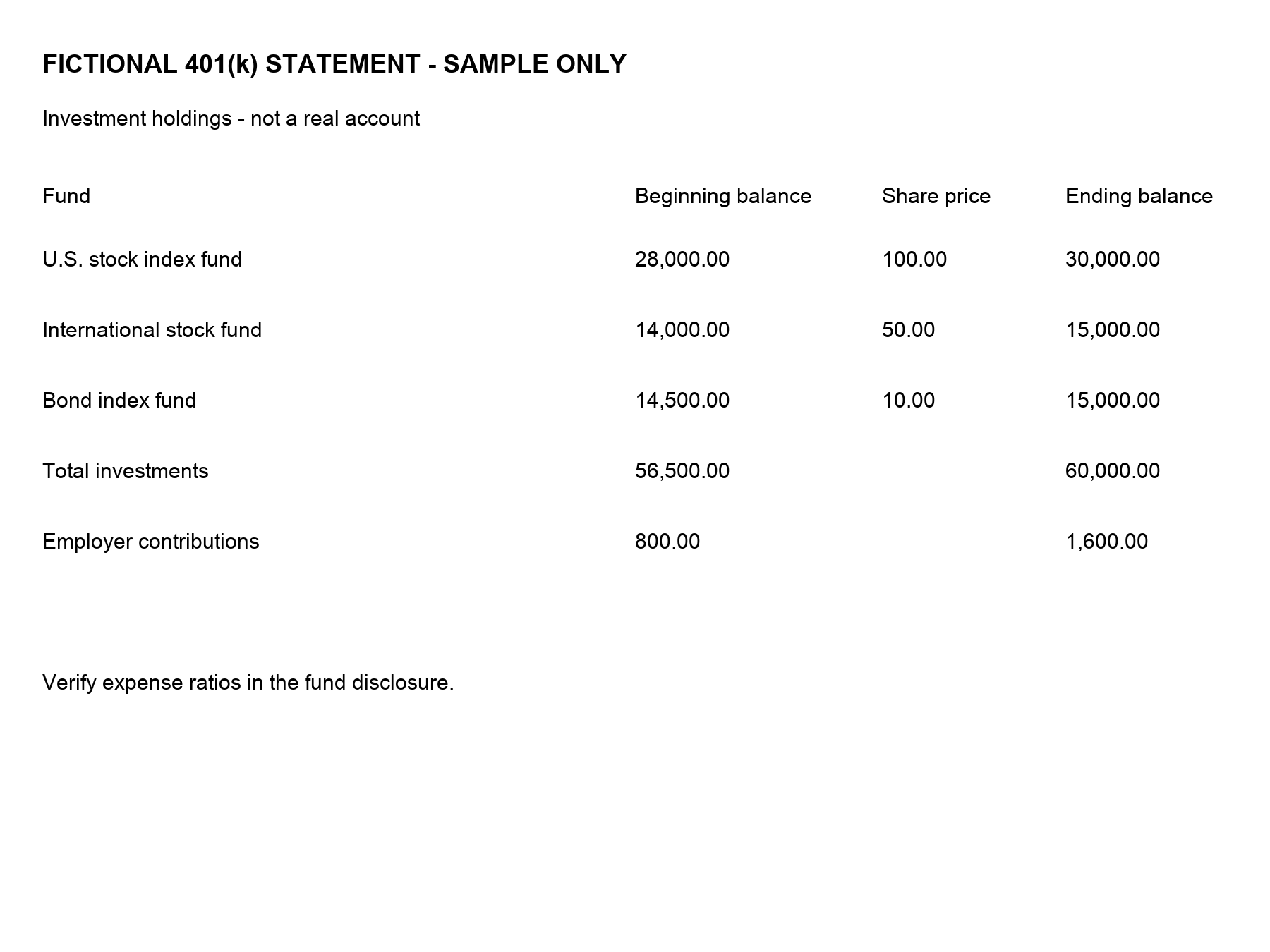
One page at a time. Choose a holdings page, not an activity or contribution-summary page. Pages are never merged automatically; holdings on other pages must be added manually.
View the selected page
Review before using these amounts
Text recognition can miss digits, mix columns or misread labels. All candidate lines start unchecked. Include only actual investments. Choose current/ending balances—not beginning balances, share quantities, share prices or transactions. Check for missing holdings. Do not import both an account total and its individual funds.
Show all text read from this page
Use this to spot a missing line. Unrecognized items can still be entered manually.
Using these holdings replaces the existing investment list only. Contributions, match, vesting and plan-fee entries stay unchanged. Your file and extracted text are then removed; imported values remain editable. All values must belong to the same plan and statement date.
THE PLAIN-ENGLISH GUIDE
Start with the language.
Is my 401(k) an investment?
Your 401(k) is a workplace retirement account. The funds inside it are the investments. A contribution election tells payroll what to add; an investment election tells the plan where to put that money. Existing balances and new-contribution allocations can differ.
Traditional vs. Roth: what changes?
Traditional elective contributions generally reduce current federal taxable income; withdrawals are generally taxable. Roth contributions use after-tax income, and qualified withdrawals are tax-free. They share an employee contribution limit. Tax treatment and investment choice are separate decisions.
What is an expense ratio?
An ongoing annual fund cost expressed as a percentage of assets. At an unchanged $10,000 balance, a 0.50% ratio is about $50 a year. These expenses are generally reflected in fund returns, rather than appearing as a separate bill. Plan administration or service fees may be additional.
How does the employer match work?
A match depends on how much you contribute and your plan’s formula. “50% of the first 6%” means the employer adds up to 3% of eligible pay when you contribute 6%. Matching can be calculated each paycheck. A year-end true-up may reconcile differences, but only if the plan provides one. Confirm the rules before changing contribution timing.
What is a target-date fund?
A fund holding a mix of investments that generally changes over time toward and sometimes beyond a target retirement year. Funds with the same year can have different risks and fees. They are not guaranteed. Mixing one with other funds changes your combined allocation; this tool does not look through to the underlying holdings.
Am I on track for retirement?
This snapshot cannot answer that on its own. Retirement readiness depends on future spending, retirement age, other savings, Social Security, taxes and uncertain returns. Use this tool to understand your plan first, then build a broader retirement plan. A high balance, full match or low fee alone does not establish readiness.
Contribution illustrations use eligible pay × contribution rate. Match tiers apply sequentially to the entered rate. Annual fund-cost estimates use each current balance × expense ratio, before market changes. Fee estimates exclude unknown amounts, transaction/service charges and costs not entered. No tax limits or investment returns are modeled, and no fund is recommended.
Educational information, not individualized financial, tax or legal advice. Confirm plan-specific terms with your administrator.
Sources · Reviewed October 18, 2026